
Kidney Disease and Stem Cells
14
Jun
Kidney Disease and Stem Cells
Kidney disease is one of the most important and widespread health challenges affecting adults around the world, yet it often develops quietly until the condition has already progressed. Because the kidneys are responsible for filtering waste, balancing fluids and minerals, regulating blood pressure, and supporting the production of important hormones, even a moderate decline in kidney function can have a serious impact on overall health. As modern medicine continues to explore new ways to support organ repair and slow disease progression, stem cell therapy has become a major topic of interest for patients and clinicians alike. For individuals researching advanced regenerative medicine options, stem cell therapy Turkey has become a frequently searched phrase, especially among patients who are looking for personalized treatment pathways, experienced medical teams, and modern healthcare infrastructure.
The relationship between kidney disease and stem cells is still being studied, but the field of regenerative medicine is moving quickly. Researchers are increasingly interested in whether stem cells may help reduce inflammation, support damaged kidney tissue, influence immune responses, and contribute to the repair environment needed for better renal function. While stem cell therapy is not a guaranteed cure for kidney disease, the topic has become important because many patients living with chronic kidney problems are looking for alternatives that go beyond symptom management alone. Understanding what stem cells may offer, where the current evidence stands, and how a proper medical evaluation works can help patients make informed and realistic decisions.
Understanding Kidney Disease and Why It Matters
Kidney disease refers to a wide range of conditions that reduce the kidneys’ ability to function properly. Some forms develop suddenly, such as acute kidney injury, while others progress slowly over time, as seen in chronic kidney disease. Chronic kidney disease is particularly concerning because it can advance silently for years, often without obvious symptoms in the early stages. By the time patients notice fatigue, swelling, changes in urination, elevated blood pressure, or loss of appetite, significant damage may already have occurred.
The kidneys are delicate filtering organs, and once kidney tissue is lost, the body has limited capacity to restore that function. This is one reason researchers have turned their attention to regenerative medicine. Instead of focusing only on controlling symptoms or delaying dialysis, stem cell research explores whether damaged kidney structures can be supported in a more direct biological way. That possibility has made kidney disease one of the most actively discussed areas in the broader field of cellular therapy.
Why the Kidneys Are Hard to Repair Naturally
The kidneys contain a highly specialized network of filtering units called nephrons. These microscopic structures perform the essential task of cleaning the blood and maintaining internal balance. When nephrons are damaged by diabetes, high blood pressure, inflammation, infections, autoimmune disease, or reduced blood flow, the surrounding tissue may scar rather than regenerate cleanly. Scar tissue does not perform the same function as healthy renal tissue, and over time this can lead to a gradual decline in kidney performance.
Unlike tissues such as skin or certain types of blood cells, kidney tissue has limited regenerative capacity once chronic damage becomes established. This limitation is a major reason why kidney disease management often focuses on slowing progression rather than reversing it. For patients and families facing this reality, regenerative medicine offers a different perspective: rather than only protecting what remains, can the body also be encouraged to repair more effectively? That question sits at the center of modern stem cell research in nephrology.
How Stem Cells May Support Kidney Health
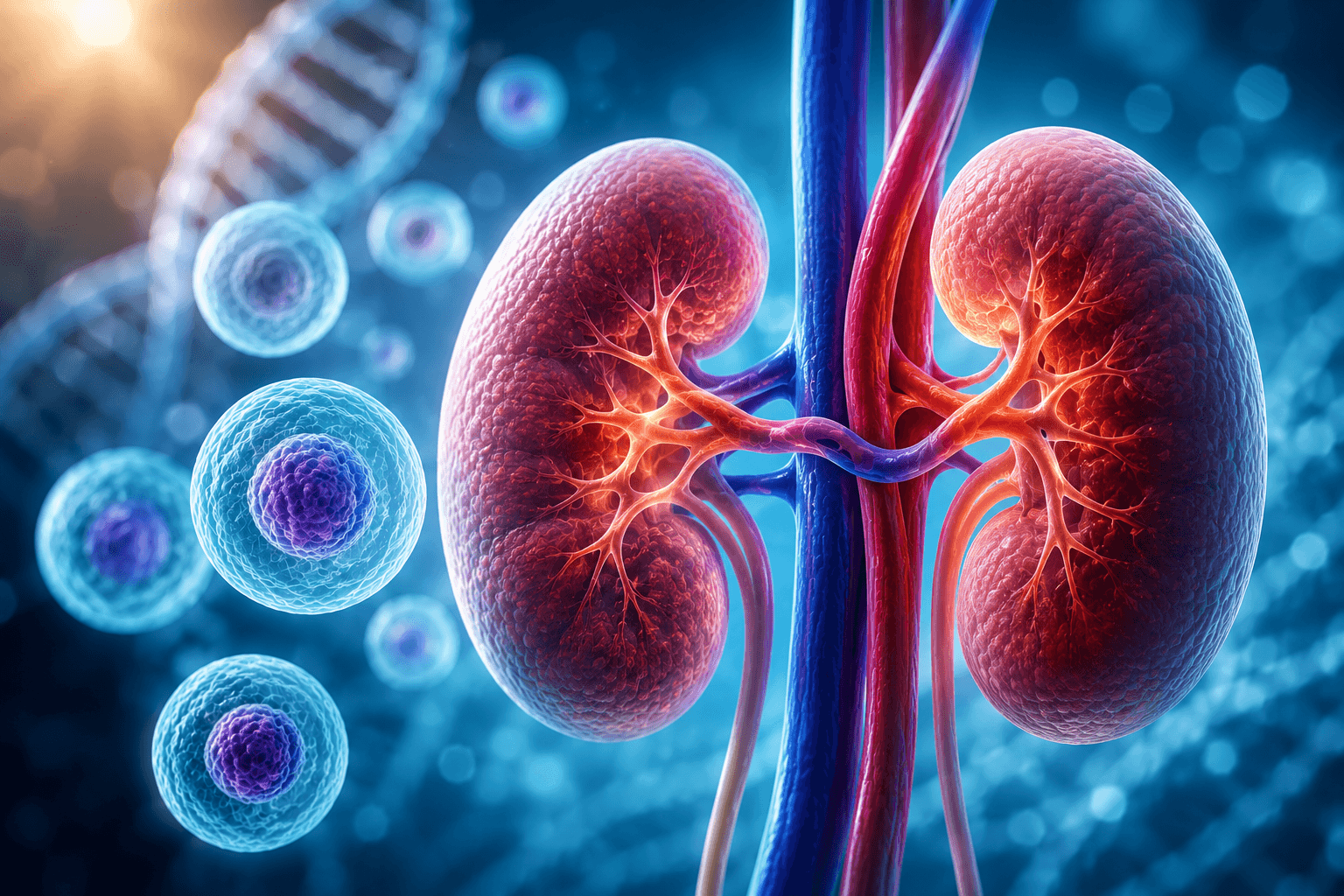
Stem cells are unique because they have the ability to develop into different cell types and to influence nearby cells through signaling molecules. In kidney disease research, the interest in stem cells does not come from a promise that they will instantly replace every damaged nephron. Instead, scientists are studying whether these cells may create a more favorable healing environment inside the kidneys.
Potential mechanisms include reducing inflammatory activity, supporting blood vessel health, promoting repair signaling, and helping regulate immune reactions that contribute to tissue injury. Some studies also explore whether stem cells may help reduce fibrosis, which is the buildup of scar tissue that limits kidney function. These biological actions are part of why stem cell therapy has become a major subject in chronic kidney disease research, even though its clinical role is still being carefully evaluated.
Patients who are exploring the broader scope of regenerative medicine may also review available stem cell therapy options to better understand how cellular approaches are being studied across different diseases and organ systems.
Which Types of Kidney Disease Are Being Studied?
Stem cell therapy is not being investigated for only one specific kidney condition. Research has expanded across several renal disorders, each with different biological challenges and treatment needs. Chronic kidney disease remains the most commonly discussed category, especially in patients whose kidney function has gradually declined because of diabetes, hypertension, or long-term inflammation. Diabetic nephropathy is another major focus because diabetes remains one of the leading causes of kidney failure worldwide.
In addition, acute kidney injury has attracted attention because early intervention may matter greatly in determining recovery outcomes. Researchers are also exploring how stem cell-based treatments might apply to autoimmune kidney disease, ischemic kidney injury, and kidney damage related to certain medications or systemic illness. Each of these conditions has a different cause, but they all share one central issue: the need for better ways to protect renal tissue from further decline and, ideally, to support healing where possible.
What Current Research Suggests About Stem Cell Therapy
Scientific studies on kidney disease and stem cells have shown promise, but they also emphasize the importance of caution. Much of the research has been conducted in laboratories or early-stage clinical settings, which means the field is still evolving. Some studies suggest that stem cells may help decrease inflammation and improve certain markers related to kidney injury. Others point to possible benefits in tissue preservation, immune modulation, and microvascular repair.
At the same time, researchers are clear that treatment protocols vary widely, and outcomes depend on the type of kidney disease, the stage of progression, the patient’s general health, and the source and preparation of the stem cells being used. For this reason, stem cell therapy is best understood as a developing area of regenerative medicine rather than a universally established treatment. Patients should always look for medically responsible clinics that explain the current evidence clearly and avoid unrealistic promises.
Who Might Be Considered for Stem Cell Evaluation?
Not every patient with kidney disease is automatically a candidate for regenerative treatment. A proper evaluation is necessary to determine whether stem cell therapy could be appropriate, beneficial, or even safe. Factors such as kidney function tests, disease stage, the presence of diabetes or hypertension, medication history, cardiovascular status, and overall physical condition all matter greatly.
Patients with early to moderate kidney disease may sometimes be evaluated differently from those with advanced-stage illness or dialysis dependence. The timing of treatment is also important because severely scarred kidney tissue may respond differently from tissue that still retains some functional potential. Physicians typically review the full medical picture before deciding whether regenerative medicine should be considered as part of a broader treatment plan. This careful and individualized approach is essential in any serious kidney care strategy.
The Role of Inflammation in Kidney Damage
Inflammation plays a major role in many forms of kidney disease. When the immune system remains overactive or when the kidneys are exposed to long-term injury, inflammatory molecules may contribute to ongoing tissue damage. This can accelerate the replacement of healthy renal tissue with scar tissue, making recovery even more difficult.
One reason stem cells have attracted so much attention is that they may help regulate inflammatory pathways. Researchers are interested in whether stem cells can calm excessive immune activity, support a healthier cellular environment, and reduce the biological stress that drives kidney decline. If these effects are confirmed more consistently in future studies, they could become an important part of how regenerative medicine supports nephrology.
Why Personalized Assessment Is Essential
Kidney disease is rarely identical from one patient to another. A person with early diabetic kidney disease will need a very different evaluation from a patient with autoimmune kidney injury or a patient whose kidney function has already significantly declined. This is why personalized assessment is one of the most important steps in any regenerative medicine journey.
Doctors usually begin with a detailed medical history, laboratory results, kidney imaging when necessary, and a review of current treatments. They then determine whether the patient may benefit from a regenerative approach, whether additional stabilization is needed first, or whether another treatment strategy would be more appropriate. This careful process helps maintain patient safety and ensures that any discussion of stem cell therapy remains grounded in real medical needs rather than marketing language.
Patients who are looking at broader treatment categories may also explore the full range of disease treatment programs available through specialized regenerative medicine providers.
Kidney Disease, Diabetes, and Long-Term Health
Because diabetes is one of the leading causes of kidney disease, many patients with renal problems are also managing blood sugar issues, cardiovascular concerns, and metabolic complications. This makes treatment planning more complex, but it also highlights why regenerative medicine is attracting interest. Patients are not only looking for ways to preserve kidney function; they are often trying to protect their overall health trajectory.
Stem cell research in this area is part of a larger effort to understand how cellular therapies may contribute to long-term tissue protection, immune balance, and improved biological resilience. A clinic that understands the interplay between kidney disease, metabolic health, and systemic inflammation is more likely to provide meaningful guidance than one that treats every patient the same way.
Why Patients Explore Treatment in Turkey
Turkey has become an increasingly recognized destination for international patients seeking advanced medical services, including regenerative medicine. Modern hospitals, experienced physicians, personalized support services, and a strong medical tourism infrastructure have helped position the country as a practical option for patients looking for comprehensive care. In this context, stem cell treatment has drawn particular attention from individuals who want access to expert consultation and coordinated treatment planning.
For many patients, the appeal is not only the medical care itself but also the combination of accessibility, service quality, and individualized support. Those researching stem cell therapy Turkey often want a treatment environment that can address their medical questions with professionalism while also guiding them through travel, scheduling, and follow-up care in a structured way.
What a Responsible Clinic Should Explain Clearly
A trustworthy regenerative medicine provider should be transparent about what stem cell therapy can realistically do, what the evidence currently shows, and where uncertainty still exists. Patients should receive clear answers about treatment goals, possible risks, expected timelines, and the need for ongoing medical monitoring. When a clinic avoids overpromising and instead focuses on careful evaluation, that is usually a good sign of medical responsibility.
For kidney disease in particular, responsible communication matters even more because the condition can be serious and progressive. A clinic should never present stem cell therapy as a replacement for nephrology care, medication management, blood pressure control, or diabetes control. Instead, it should be discussed as part of a broader and carefully considered treatment framework.
Questions Patients Commonly Ask
People considering regenerative medicine for kidney disease often ask whether stem cells can restore lost kidney function, whether dialysis can be avoided, and how soon improvement might be seen. These are understandable questions, but the answers depend heavily on each patient’s specific condition. Some patients may be interested in whether treatment can help slow progression, while others want to know whether inflammation markers or kidney-related laboratory values may improve over time.
It is also common for patients to ask whether stem cell treatment is suitable when kidney disease is already advanced. In many cases, the degree of damage and the remaining functional reserve determine whether regenerative medicine is worth discussing. This is why medical records, laboratory values, and specialist evaluation are so important before any treatment plan is considered.
Future Directions in Kidney Regeneration
As stem cell science advances, kidney disease remains one of the most important areas of interest in regenerative medicine. Future developments may include more precise cell delivery methods, improved cell selection, better understanding of immune and inflammatory pathways, and stronger clinical evidence about which patients may benefit most. Researchers are also studying how stem cells might be combined with other regenerative technologies to improve outcomes.
While much more research is needed, the interest surrounding kidney disease and stem cells continues to grow for a reason. Patients living with chronic renal conditions need more options, and the scientific community is actively searching for better ways to protect kidney tissue, slow disease progression, and support quality of life. For individuals exploring this area, consultation with a qualified medical team remains the best first step toward understanding whether regenerative medicine may have a place in their care plan.
As medical innovation continues to develop, many patients will keep looking for reliable, transparent, and personalized approaches to kidney care. That is why the conversation around kidney disease and stem cells is likely to remain central in regenerative medicine for years to come, especially in countries such as Turkey where international patients increasingly seek advanced, coordinated treatment pathways.
Latest Posts



Share
Quick Question